
HVAC, ventilation and refrigeration cleaning specialists
Climeo cleans HVAC, ventilation and refrigeration equipment across Greater Montreal — wall units and heat pumps, ducts and air exchangers, dryer vents, humidifiers and commercial refrigeration. Cleaning and maintenance is the specialty, with online booking for homes and quote-based service for buildings.
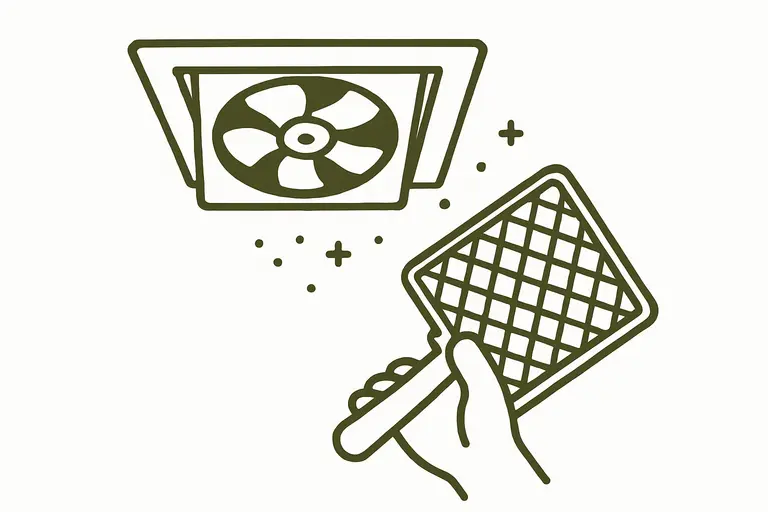
Service includes
- Fan grille and blade cleaning — dust and lint cake here first
- Accessible motor housing and duct-entry cleaning
- Airflow rechecked at the grille after cleaning
- Building-wide scheduling for condos and rental properties
Common in
- Condos and apartments
- Multi-unit buildings
- Property managers
- Commercial washrooms
- Hotels
How to get started
Send us your equipment details, photos, and any issues. We confirm scope and pricing before scheduling.
What this service covers
- Fan blade and motor cleaning
- Duct connection inspection
- Grille removal and cleaning
- Airflow verification
Service scope
- Tell us what equipment you have — Climeo confirms scope before scheduling
Why bathroom exhaust cleaning matters
A clogged bathroom exhaust fan cannot remove moisture effectively. In condos and apartments, this leads to condensation, potential mould growth, and stuffy air. Regular cleaning restores designed ventilation capacity.
Multi-unit and property manager service
We offer building-wide bathroom exhaust cleaning for condos, apartments, and rental properties. One scheduling contact, consistent service across all units, volume pricing available.
What a bathroom fan is actually for
Most people think of it as an odour fan. Its real job is moisture: pulling humid air out fast enough that water vapour leaves the building instead of condensing on cold surfaces. That distinction explains the symptoms. When a fan is failing you rarely notice a smell problem first — you notice the mirror staying fogged several minutes after a shower, condensation on the window in the same room, paint peeling near the ceiling, or dark speckling where the ceiling meets an exterior wall. Those are moisture-removal failures, and in Montreal they show up in winter first, when the temperature difference across the wall is greatest.
A simple test needs one square of toilet paper. Turn the fan on and hold the square flat against the grille. A healthy fan holds it there without help. If it falls, or clings only weakly, the fan is moving far less air than it was designed to, and the cause is almost always accumulation rather than a failed motor.
What you can do yourself, safely
Turn the breaker off first — not the wall switch, the breaker. Most grilles are held by two spring clips: pull the cover down a couple of centimetres and squeeze the clips inward to release it. Wash the grille in warm water with dish soap, rinse, and let it dry completely before it goes back up. With the cover off and the power still off, vacuum the visible dust from the housing and the blades using a brush attachment.
Two things to avoid at this point. Do not spray any liquid, cleaner or lubricant into the housing: the motor is not sealed, and liquid in the windings ends the motor. And do not refit the grille while it is still damp, because trapped moisture is what starts the next cycle of buildup.
That covers the visible half. What a homeowner cannot reach is the run behind the housing and the point where it terminates. That section collects a felt-like mat of dust bound together by moisture, and clearing it needs the housing removed and the run brushed and extracted from the fan side.
The problem specific to older buildings here
A significant number of bathroom fans in older Montreal housing exhaust into an attic or soffit cavity rather than to open air. The fan then works perfectly and the moisture never leaves the building — it condenses on the underside of the roof deck instead. If your fan sounds strong but the room still stays damp, and especially if you have seen staining or frost on attic sheathing, the termination is worth checking before anything else. Cleaning a fan that vents into an attic makes it quieter; it does not solve the moisture problem underneath.
On frequency, honestly: a single-occupant bathroom with a window can go two or three years. A windowless bathroom used daily by a family benefits from annual attention. Rental units are worth doing at tenant turnover regardless of the calendar, because it is the one moment the room is empty and accessible.
Questions about this service
How often should bathroom exhaust fans be cleaned?
Every 6–12 months. Multi-unit buildings with high humidity may benefit from more frequent cleaning.
Do you offer multi-unit pricing?
Yes. For property managers, we offer coordinated multi-unit cleaning with volume pricing.